
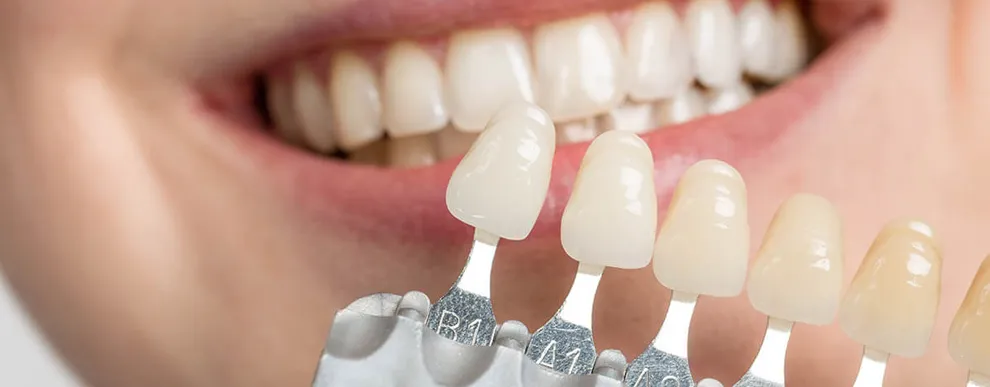
Teeth whitening is one of the most popular cosmetic dental treatments — but if you have veneers, crowns, bonding, or fillings, you may be wondering whether whitening products will work for you.
The short answer?
Whitening treatments only work on natural tooth enamel.
However, understanding how dental restorations respond — and what your options are — can help you still achieve a brighter, more balanced smile.
This guide explains exactly what whitening can and can’t do when dental work is involved, plus expert-backed alternatives to improve your smile safely.
How Teeth Whitening Actually Works
Most whitening products use hydrogen peroxide or carbamide peroxide to penetrate natural enamel and break down internal stains caused by food, drink, smoking, and ageing.
⚠️ Important:
These whitening agents do not change the colour of artificial materials, including porcelain, ceramic, resin, or composite.
That’s why dental restorations behave differently during whitening.
Does Teeth Whitening Work on Veneers?
No — veneers do not whiten.
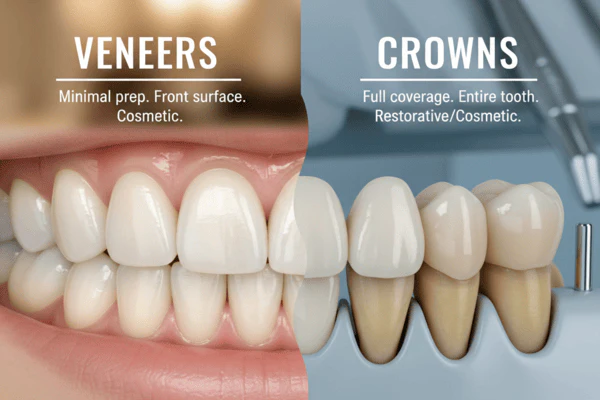
Porcelain and composite veneers are colour-stable by design. Whitening gels and strips cannot penetrate the surface, meaning their shade will remain exactly the same.
What This Means in Practice
- Natural teeth may become whiter
- Veneers stay the same colour
- Result: possible shade mismatch
When Whitening Can Still Help
If veneers are only on a few teeth (often the front ones), whitening surrounding natural teeth before replacing veneers can help dentists colour-match new restorations more accurately.
💡 Many dentists recommend whitening before veneer placement for this reason.
Can Crowns Be Whitened?
No — crowns cannot be whitened.
Dental crowns are typically made from:
- Porcelain
- Ceramic
- Zirconia
- Porcelain-fused-to-metal
None of these materials respond to whitening agents.
Common Crown-Related Whitening Issues
- Crown looks darker after whitening natural teeth
- Gumline contrast becomes more noticeable
- Front-tooth crowns stand out more post-whitening
If a crown is visible when you smile, whitening may highlight colour differences rather than improve them.
What About Fillings and Bonding?
Composite fillings and bonding do not whiten either.
They are colour-matched at the time of placement and remain unchanged during whitening.
Typical Results
- Natural teeth lighten
- Fillings stay the same shade
- Older fillings may appear darker by comparison
This is especially noticeable with:
- Front-tooth bonding
- Large composite fillings
- Edge bonding used for cosmetic shaping
Will Whitening Damage Veneers or Crowns?
Good news — properly used whitening products do not damage dental work.
Whitening gels are generally:
- Non-abrasive
- Safe for porcelain and composite surfaces
- Designed to avoid structural harm
However, whitening won’t improve their appearance either.
⚠️ Overuse or misuse can cause:
- Temporary tooth sensitivity
- Gum irritation
- Uneven cosmetic results
Always follow product instructions carefully.
Best Options If You Have Dental Work
If whitening won’t work on restorations, what does?
1. Professional Cleaning & Polishing
Surface stains can build up on veneers and crowns over time.
A hygienist can often restore brightness with:
- Professional scaling
- Polishing pastes
- Air-polishing treatments
2. Whitening Natural Teeth + Replacement
For a full smile makeover:
- Whiten natural teeth first
- Replace visible veneers, crowns, or bonding to match the new shade
This delivers the most uniform, long-term result.
3. Cosmetic Re-Bonding
Bonding can be:
- Re-shaded
- Replaced
- Adjusted to match surrounding teeth
This is often more affordable than crown or veneer replacement.
Frequently Asked Questions
Can I whiten my teeth if I have veneers?
Yes, but only your natural teeth will whiten. Veneers will remain the same colour, which may lead to uneven results.
Will whitening strips work on crowns?
No. Whitening strips only affect natural enamel and will not change the colour of crowns.
Can I damage my veneers by whitening?
No, reputable whitening products are safe for veneers — they just won’t whiten them.
Why do my crowns look darker after whitening?
Because your natural teeth have lightened while the crown shade stayed the same.
Should I whiten before getting veneers or crowns?
Yes. Whitening first allows your dentist to match restorations to your brightest natural shade.
Is Whitening Worth It With Dental Work?
Teeth whitening does not work on veneers, crowns, fillings, or bonding — but it can still play an important role in your smile plan.
✔ Ideal for natural teeth
✔ Safe for dental restorations
✔ Best used before cosmetic dental work
✖ Will not change artificial tooth colour
If you have existing dental work and want a brighter smile, the best results come from combining whitening with professional advice or cosmetic updates.