
If you’ve been researching Crest 3D Whitestrips, you’ve probably wondered one thing: how much hydrogen peroxide is actually in each product?
It’s a sensible question. Hydrogen peroxide is the active whitening ingredient responsible for lifting stains from the enamel, and the concentration can influence how quickly you see results, how much whitening you achieve, and how likely you are to experience tooth sensitivity.
Although Crest does not officially publish the peroxide concentration for every Whitestrips product, scientific studies, product safety information, patents, and independent testing provide a reliable picture of the strengths used throughout the range.
In this guide, we’ll explain the peroxide levels found in popular Crest Whitestrips, how hydrogen peroxide works, and which product is best suited to your whitening goals.
What Is Hydrogen Peroxide?
Hydrogen peroxide is the gold standard ingredient used by dentists for professional teeth whitening.
When applied to the teeth, hydrogen peroxide breaks down into oxygen molecules that penetrate the porous enamel. These oxygen molecules dissolve the coloured compounds that cause staining from everyday foods and drinks such as:
- Coffee
- Tea
- Red wine
- Cola
- Curry
- Smoking and tobacco
- Natural ageing
Unlike abrasive whitening toothpastes that only polish away surface stains, hydrogen peroxide works below the enamel surface to brighten the natural colour of your teeth.
This is why virtually all professional whitening systems use either hydrogen peroxide or carbamide peroxide, which breaks down into hydrogen peroxide once applied.
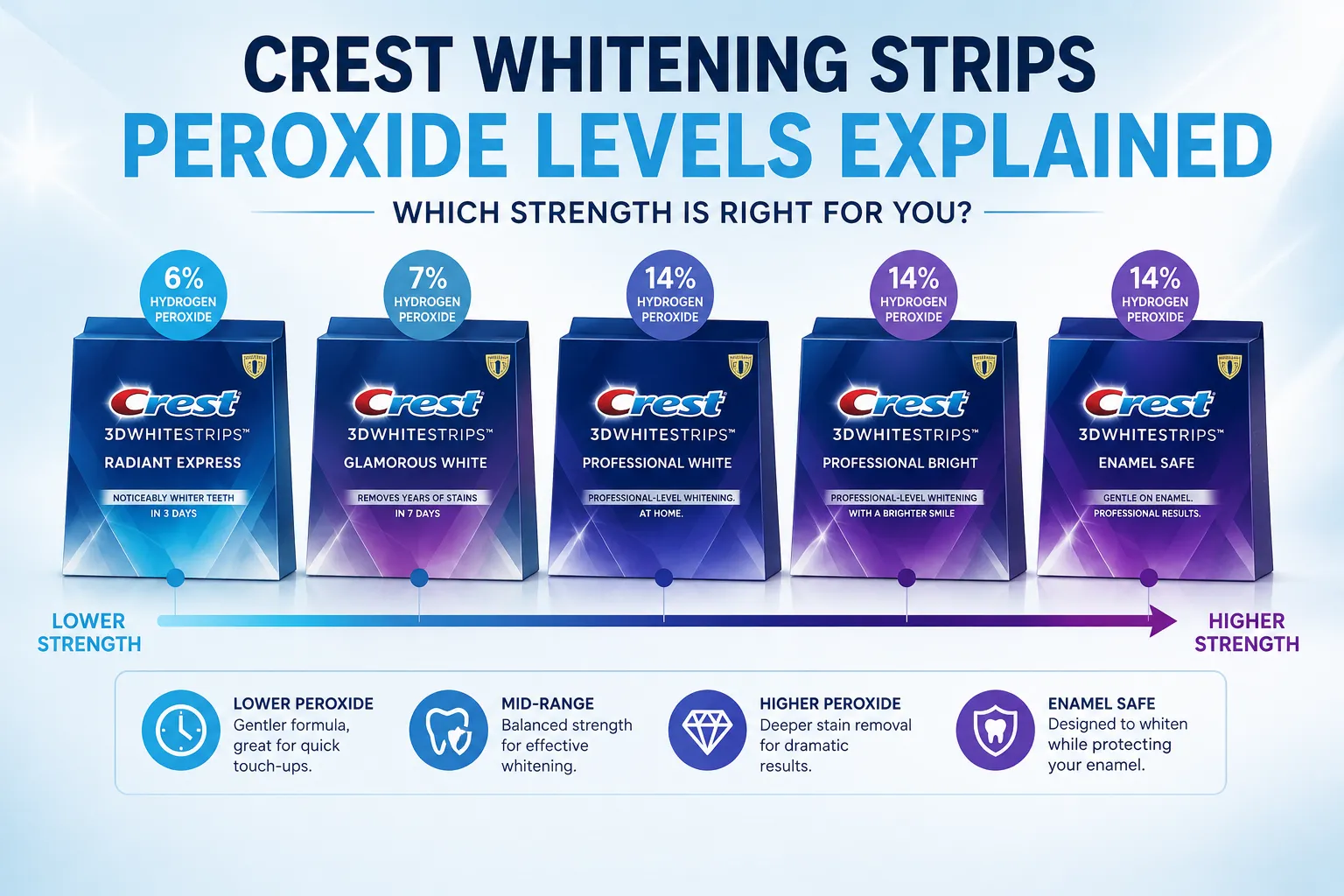
Crest Whitening Strips Peroxide Levels
The table below summarises the approximate hydrogen peroxide concentration found in popular Crest Whitestrips.
| Crest Product | Approx. Hydrogen Peroxide |
|---|---|
| Crest Sensitive | 6–6.5% |
| Crest Gentle Routine | 5–6% |
| Crest Professional Effects / Age Renew | 10% |
| Crest Glamorous White / Professional White | 10% |
| Crest Radiant Express | 10% |
| Crest Brilliance White | 10% |
| Crest 1 Hour Express | 10–12% |
| Crest Supreme FlexFit (Discontinued) | 14% |
While these figures are approximate for some products, they align closely with published research and independent laboratory testing.
Which Crest Strips Are the Strongest?
Historically, the strongest Crest Whitestrips ever produced were Crest Supreme FlexFit, containing approximately 14% hydrogen peroxide.
These strips delivered rapid whitening results but were eventually discontinued.
Today, Crest’s flagship products such as Professional Effects, Professional White Strips, Glamorous White, Age Renew, and Radiant Express contain around 10% hydrogen peroxide, providing an excellent balance between whitening effectiveness and comfort.
For most users, 10% hydrogen peroxide is considered the “sweet spot” for noticeable whitening with manageable sensitivity.
Do Higher Peroxide Levels Mean Better Results?
Not necessarily.
Many people assume that doubling the peroxide concentration doubles the whitening effect—but that’s not how whitening works.
Several factors influence the final result, including:
- Contact time with the teeth
- Strip adhesion
- Consistency of treatment
- Existing stain severity
- Individual enamel characteristics
For example, a well-designed 10% whitening strip worn consistently over two weeks can often outperform a stronger product that isn’t used correctly.
This is one reason Crest Whitestrips have become so popular worldwide. Their Advanced Seal technology keeps the whitening gel firmly against the enamel, allowing the peroxide to remain active throughout the treatment.
Hydrogen Peroxide vs Carbamide Peroxide
Many professional home whitening gels use carbamide peroxide instead of hydrogen peroxide.
The two ingredients are closely related.
Carbamide peroxide gradually breaks down into hydrogen peroxide after application.
As a general guide:
- 10% carbamide peroxide ≈ 3.5% hydrogen peroxide
- 16% carbamide peroxide ≈ 5.6% hydrogen peroxide
- 22% carbamide peroxide ≈ 7.5% hydrogen peroxide
- 35% carbamide peroxide ≈ 12% hydrogen peroxide
- 44% carbamide peroxide ≈ 15% hydrogen peroxide
Hydrogen peroxide begins working immediately, whereas carbamide peroxide releases its whitening power more slowly over several hours.
This is why hydrogen peroxide products are often used for shorter treatments, while carbamide peroxide gels are frequently recommended for overnight whitening trays.
We have a more information in our blog article here:
Which Crest Whitestrips Are Best for Sensitive Teeth?
If you’ve experienced sensitivity from whitening before, choosing a lower peroxide concentration may help.
The gentlest options include:
- Crest Sensitive
- Crest Gentle Routine
These products contain approximately 5–6.5% hydrogen peroxide and are designed for gradual whitening while minimising sensitivity.
Many users achieve excellent results simply by whitening over a slightly longer period.
How Long Does It Take to See Results?
Most users begin noticing improvements after just a few applications.
Typical whitening timeline:
After 2–3 treatments
- Surface stains begin fading.
After 7 days
- Teeth often appear several shades brighter.
After 14–20 days
- Full whitening results are usually achieved.
The exact timeline depends on the severity of staining and the peroxide concentration used.
Are Higher Peroxide Levels Safe?
When used exactly as directed, hydrogen peroxide whitening products have been extensively studied and are considered safe for healthy teeth.
Clinical research has shown that peroxide whitening does not permanently damage enamel when products are used according to the manufacturer’s instructions.
Temporary tooth sensitivity and mild gum irritation are the most common side effects. These usually resolve within a day or two after treatment.
If you have untreated cavities, leaking fillings, gum disease or exposed tooth roots, it’s best to address these issues before beginning any whitening treatment.
Choosing the Right Crest Whitening Strips
Your ideal product depends on your goals.
For first-time users
- Crest Sensitive or Gentle Routine.
For everyday coffee, tea or wine stains
- Crest Professional Effects or Professional White Strips.
For faster whitening
- Crest Radiant Express or 1 Hour Express.
For maximum whitening
- Professional Effects remains one of the best all-round options, offering an excellent balance of speed, whitening power and comfort.
Final Thoughts
Hydrogen peroxide is the ingredient that makes Crest Whitestrips so effective.
While peroxide concentration plays an important role, it’s only one part of the equation. Proper application, treatment consistency and high-quality strip technology all contribute to your final whitening results.
Most modern Crest Whitestrips contain around 10% hydrogen peroxide, making them comparable to many dentist-supervised take-home whitening systems while remaining convenient to use at home.
Whether you’re looking for gentle whitening or dramatic stain removal, understanding the peroxide levels in each product can help you choose the right treatment for your smile.
Frequently Asked Questions
What peroxide do Crest Whitestrips use?
Most Crest Whitestrips use hydrogen peroxide as their active whitening ingredient.
Which Crest Whitestrips have the highest peroxide concentration?
The discontinued Crest Supreme FlexFit contained approximately 14% hydrogen peroxide. Current premium products are generally around 10%.
Is 10% hydrogen peroxide enough to whiten teeth?
Yes. A 10% hydrogen peroxide gel is considered a professional-strength concentration capable of producing significant whitening when used correctly.
Can higher peroxide damage enamel?
Current evidence indicates that professionally formulated hydrogen peroxide whitening products do not permanently damage enamel when used according to the instructions.
How often should I use Crest Whitestrips?
Always follow the instructions for your specific product. Most treatment courses involve daily use for 10–20 days, depending on the formulation.