
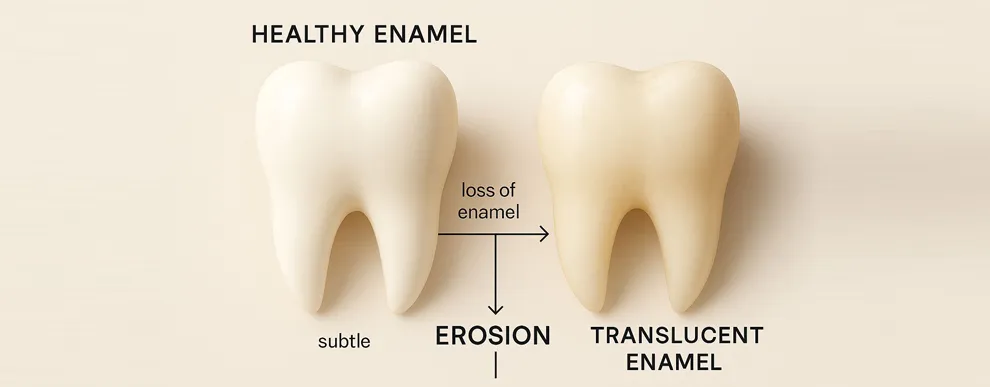
Teeth whitening is one of the most popular cosmetic dental treatments, but one of the biggest concerns people have is whether whitening can damage tooth enamel. The simple answer is: teeth whitening should not damage healthy enamel when it is used correctly, at the correct strength, and for the recommended amount of time. However, misuse, overuse, illegal high-strength products, poor-fitting trays, or whitening already weakened teeth can increase the risk of sensitivity, gum irritation and potential enamel problems.
This article explains what the evidence says, how whitening works, when it is safe, when it can become risky, and how to protect your enamel while whitening your teeth.
What Is Tooth Enamel?
Tooth enamel is the hard, outer layer of your teeth. It protects the softer dentine underneath and helps defend teeth against acid, wear, temperature changes and decay. Enamel is very strong, but it does not regenerate once permanently lost.
This is why people worry about whitening. Any product used on teeth regularly should be safe for enamel when used properly.
How Does Teeth Whitening Work?
Most effective teeth whitening products use either hydrogen peroxide or carbamide peroxide. These ingredients release oxygen molecules that break down coloured stain compounds within or on the surface of the teeth. This makes teeth appear whiter and brighter.
Whitening can help with stains caused by:
- Coffee
- Tea
- Red wine
- Smoking
- Dark foods and sauces
- Age-related staining
- General yellowing of natural teeth
Whitening works on natural tooth structure. It will not whiten crowns, veneers, fillings, bonding or dentures.
Does Teeth Whitening Damage Enamel?
When used correctly, peroxide-based whitening is generally considered safe for healthy enamel. Dental research has found that professionally controlled whitening products usually do not cause significant permanent changes to enamel hardness.
The key words are used correctly.
Whitening is safest when:
- The product is from a reputable source
- The strength is appropriate
- Instructions are followed
- Treatment time is not exceeded
- Teeth and gums are healthy before whitening
- A dentist is consulted if there are existing dental issues
Whitening becomes more risky when people use products too often, leave gels on too long, use unknown high-strength products, apply whitening to damaged teeth, or use DIY acidic remedies such as lemon juice.
What Does the Evidence Say?
The evidence generally shows that enamel damage is not expected from properly used, regulated whitening products. However, temporary side effects are common.
The most common side effects are:
- Temporary tooth sensitivity
- Gum irritation
- Sore gums
- White patches on gums
- Irritation from excess gel
These effects usually settle after stopping or completing treatment.
Research reviews have found that tooth sensitivity and gum irritation are the most frequently reported adverse effects. These side effects are more common with higher peroxide concentrations but are often mild and temporary.
Why Do Teeth Become Sensitive After Whitening?
Sensitivity does not always mean enamel damage. Whitening ingredients can temporarily pass through enamel and dentine, reaching areas closer to the nerve inside the tooth. This can make teeth more reactive to cold air, cold drinks, sweet foods or brushing.
Sensitivity is more likely if:
- You already have sensitive teeth
- You have gum recession
- You have exposed dentine
- You have enamel erosion
- You use high-strength whitening
- You whiten too frequently
- Whitening gel touches the gums
- You have untreated cavities or cracks
For most people, whitening sensitivity is temporary. If pain is strong, persistent or only affects one tooth, it should be checked by a dentist.
Can Whitening Make Enamel Thinner?
Correct peroxide whitening does not work by scraping enamel away. It works chemically by oxidising stains. This is different from abrasive whitening toothpastes or harsh DIY methods.
However, some whitening toothpastes rely heavily on abrasives to polish away surface stains. Used gently, many are safe. But aggressive brushing, hard toothbrushes or overuse of abrasive products may contribute to enamel wear over time.
This means the risk is often not whitening itself, but:
- Brushing too hard
- Using highly abrasive toothpaste too often
- Combining multiple whitening products at once
- Using acidic DIY treatments
- Whitening teeth that already have enamel erosion
Is Hydrogen Peroxide Bad for Teeth?
Hydrogen peroxide is one of the most widely used whitening ingredients. In controlled concentrations, it is effective and widely used in dental whitening.
It becomes a problem when:
- The concentration is too high
- It is used too often
- It is left on teeth too long
- It contacts gums repeatedly
- The product is illegal or unregulated
- The person has untreated dental problems
In the UK, whitening products are tightly regulated. Over-the-counter products can only contain very low levels of hydrogen peroxide, while higher-strength whitening must be provided through a registered dental professional.
Professional Whitening vs At-Home Whitening
Professional whitening is usually safer because a dentist can check your teeth first. They can look for cavities, gum disease, cracks, exposed roots, worn enamel or restorations that may affect treatment.
Dentist-supervised whitening also helps ensure:
- The correct gel strength is used
- Trays fit properly
- Gel does not leak onto gums
- Treatment times are controlled
- Sensitivity can be managed
At-home whitening products can still be safe when purchased from reputable retailers and used as directed. The biggest risk comes from unregulated products, especially those sold online with unknown or excessive peroxide levels.
Who Should Be Careful With Teeth Whitening?
You should speak to a dentist before whitening if you have:
- Sensitive teeth
- Gum recession
- Enamel erosion
- Cracked teeth
- Untreated cavities
- Gum disease
- Exposed roots
- Dental restorations on visible front teeth
- Braces or recent orthodontic treatment
- A history of dental pain
- Pregnancy or breastfeeding concerns
Whitening may not be suitable until underlying problems are treated.
Can Illegal Whitening Products Damage Enamel?
Yes. Illegal or unregulated whitening products are one of the biggest concerns. Products with excessive peroxide levels can cause severe sensitivity, burns to the gums, pulp irritation and potential long-term tooth problems.
This is why buying from trusted sources and following UK regulations is important.
Avoid whitening products that:
- Do not list ingredients clearly
- Claim extreme instant results
- Use very high peroxide levels
- Are labelled “professional use only” but sold directly to consumers
- Come from unknown marketplaces
- Have no safety instructions
- Encourage excessive daily use
Are Whitening Strips Safe for Enamel?
Whitening strips can be safe when used as directed, but they may cause temporary sensitivity or gum irritation. The risk increases with higher peroxide levels, longer wear times or repeated treatment cycles without breaks.
To reduce risk:
- Follow the instructions exactly
- Do not sleep with strips unless instructed
- Avoid using multiple whitening products at the same time
- Stop if irritation becomes painful
- Use a sensitivity toothpaste if needed
- Give teeth time between whitening cycles
Are Whitening Toothpastes Safe?
Most whitening toothpastes are safe for daily use when used correctly. They are best for surface stains and maintenance rather than dramatic shade changes.
The main risk with whitening toothpaste is abrasion. Toothpaste that is too abrasive, combined with hard brushing, can contribute to enamel wear and gum recession.
To use whitening toothpaste safely:
- Use a soft toothbrush
- Brush gently
- Do not scrub aggressively
- Avoid combining with acidic DIY remedies
- Alternate with a sensitive toothpaste if needed
DIY Whitening Methods That Can Damage Enamel
Some online whitening trends are much more dangerous than proper whitening products.
Avoid using:
- Lemon juice
- Apple cider vinegar
- Baking soda mixed with acids
- Household hydrogen peroxide
- Chlorine dioxide
- Bleach
- Magic erasers
- Charcoal powders used aggressively
Acidic products can soften enamel, while abrasive products can wear it away. Once enamel is lost, it cannot grow back.
How To Whiten Teeth Without Damaging Enamel
To whiten safely:
- Choose reputable whitening products.
- Follow the instructions exactly.
- Do not exceed recommended wear times.
- Avoid using several whitening products at once.
- Use a soft toothbrush.
- Avoid harsh scrubbing.
- Take breaks between whitening treatments.
- Use sensitivity toothpaste if needed.
- Avoid acidic DIY whitening methods.
- See a dentist if you have pain, cavities or gum problems.
Does Whitening Permanently Damage Teeth?
For most healthy adults, correctly used whitening does not permanently damage teeth. The most common side effects are temporary sensitivity and gum irritation.
However, permanent problems can occur when whitening is misused, especially with illegal products, excessive peroxide, poor oral health or repeated overuse.
Final Verdict: Does Teeth Whitening Damage Enamel?
Teeth whitening does not usually damage healthy enamel when it is carried out correctly and responsibly. The strongest evidence suggests that regulated peroxide whitening is generally safe, with tooth sensitivity and gum irritation being the most common temporary side effects.
The real risks come from misuse: over-whitening, using products that are too strong, buying unregulated gels, ignoring dental problems, or using harsh DIY remedies.
If you want the safest results, choose reputable whitening products, follow instructions carefully and speak to a dentist before whitening if you have sensitivity, enamel wear, gum recession or untreated dental issues.
Supporting evidence you can cite: The ADA says sensitivity and oral irritation are the most common adverse effects of home whitening and are usually mild/transient, especially at higher concentrations. The NHS lists temporary sensitivity, sore gums/throat and white gum patches as possible side effects of professional whitening. A peroxide safety review concluded peroxide whitening is safe and effective when used properly, with sensitivity and gum irritation the most common effects. A systematic review/meta-analysis found no significant enamel microhardness changes with 10% carbamide peroxide home bleaching.