
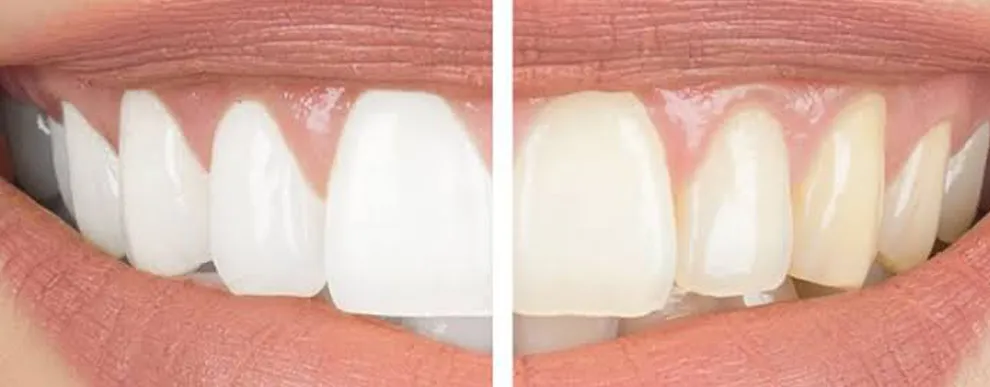
One of the most common questions people ask before whitening their teeth is: “How white can my teeth actually get?” The answer is that while teeth can become dramatically whiter, there is a natural limit. The final shade depends on your starting colour, the type of stains you have, your age, your enamel, and the whitening method you use.
For some people, whitening can transform a smile by 8–12 shades. Others may only see a more modest improvement. Understanding what is realistically possible can help you choose the right treatment and avoid disappointment.
Teeth have a natural colour
Many people assume healthy teeth should be brilliant white. In reality, natural teeth come in a range of shades.
Your tooth is made up of two main layers:
- Enamel – the hard, translucent outer layer.
- Dentine – the yellowish layer beneath the enamel.
Because enamel is naturally translucent, some of the dentine colour always shows through. This means even perfectly healthy teeth are often slightly cream, ivory or light yellow rather than paper white.
This is why no whitening treatment can make natural teeth permanently brighter than their underlying structure allows.
How much whiter can teeth become?
Professional studies generally show that peroxide-based whitening can improve tooth colour by several shades. The exact improvement varies between individuals.
Typical results include:
- Mild staining: 2–4 shades lighter
- Moderate staining: 4–8 shades lighter
- Heavy staining: 6–12 shades lighter
People with yellow teeth often experience better results than those with grey or blue-toned staining.
Your starting shade matters
The darker your teeth are to begin with, the more noticeable the improvement can be.
Yellow teeth
These usually respond extremely well because the stains are often organic and easier for whitening gels to break down.
Brown teeth
Often improve significantly, although treatment may take longer.
Grey teeth
Grey staining can be much more difficult to remove. This type of discolouration may be caused by:
- Certain medications
- Dental trauma
- Ageing
- Internal tooth changes
Some grey staining improves with whitening, while other cases may require cosmetic dental treatment.
Different whitening methods produce different results
Whitening toothpaste
These mainly remove surface stains using mild abrasives and polishing agents.
Typical improvement:
- 0–2 shades
Good for maintaining results but unlikely to dramatically change tooth colour.
Whitening strips
High-quality peroxide whitening strips can deliver impressive results for many people.
Typical improvement:
- 4–8 shades
Products containing hydrogen peroxide generally work faster than non-peroxide alternatives.
Whitening gels with trays
Professional-strength whitening gels used with custom or well-fitting trays usually produce the greatest improvement because they maintain close contact with the teeth.
Typical improvement:
- 6–12 shades
Treatment normally takes between one and three weeks depending on the gel strength and wear time.
In-practice professional whitening
Dentist-supervised whitening using professional systems often provides the fastest visible change, particularly when combined with take-home trays for continued treatment.
Is there a maximum shade?
Yes.
Most dentists use shade guides to measure colour changes.
Common shade guides include colours such as:
- A1
- B1
- C1
- D2
B1 has traditionally been regarded as one of the lightest natural tooth shades.
Many modern whitening systems also refer to “Bleach Shades” or “BL shades”, which are lighter than natural tooth colours and are often achievable after successful professional whitening.
However, not everyone can naturally reach these extremely bright shades.
Why can’t everyone achieve Hollywood-white teeth?
Several factors limit whitening results.
Genetics
Some people naturally have thicker enamel or lighter dentine.
Others naturally have darker tooth structure that cannot be completely altered.
Age
As we age:
- Enamel gradually becomes thinner.
- Dentine naturally darkens.
- Teeth accumulate decades of staining.
Older teeth usually require more treatment and may never become as bright as younger teeth.
Existing dental work
Whitening only affects natural tooth structure.
It does not whiten:
- Crowns
- Veneers
- Composite fillings
- Bonding
- Bridges
If visible restorations are darker than your newly whitened teeth, they may need replacing for a colour match.
What stains respond best?
The easiest stains to remove include:
- Coffee
- Tea
- Red wine
- Smoking
- Everyday food staining
More difficult staining includes:
- Tetracycline staining
- Fluorosis
- Trauma-related discolouration
- Root canal-treated teeth
These cases often require specialist dental advice.
Can teeth become too white?
Yes.
Over-whitening can create an unnaturally bright appearance that may not complement your skin tone.
Some people also experience:
- Temporary sensitivity
- Gum irritation if gels contact soft tissue
- Uneven whitening if treatment instructions are not followed
Whitening should always be carried out according to the manufacturer’s or your dentist’s instructions.
How long do whitening results last?
Results are not permanent because teeth continue to pick up new stains.
Many people maintain their results for:
- 6–12 months with normal eating and drinking habits.
- Longer with good oral hygiene and occasional top-up treatments.
Reducing coffee, tea, red wine and smoking can help keep teeth whiter for longer.
Tips for achieving the best whitening results
To maximise your whitening treatment:
- Have your teeth professionally cleaned before whitening if needed.
- Brush and floss regularly.
- Follow the whitening instructions carefully.
- Complete the full treatment course.
- Avoid tobacco.
- Limit staining foods and drinks during treatment.
- Use whitening toothpaste for maintenance after treatment.
Frequently Asked Questions
What is the whitest natural tooth colour?
Traditionally, B1 is considered one of the lightest natural tooth shades. Some whitening treatments can achieve even lighter “bleach shades”, although results vary.
Can yellow teeth become completely white?
Many yellow teeth respond extremely well to peroxide whitening, often becoming several shades lighter. However, they may not become perfectly paper white because natural dentine colour still influences the final appearance.
Can whitening make my teeth look like veneers?
Not usually. Veneers can be manufactured in shades that are brighter and more opaque than natural teeth. Whitening can significantly improve natural teeth but cannot change their underlying structure.
How many shades lighter can professional whitening make teeth?
Many people see improvements of 6–12 shades, although results depend on the original tooth colour, stain type and the whitening system used.
Why didn’t my teeth become as white as expected?
Possible reasons include:
- Grey or internal staining
- Thin enamel
- Existing crowns or veneers
- Not completing the treatment
- Unrealistic expectations based on heavily edited celebrity photos