
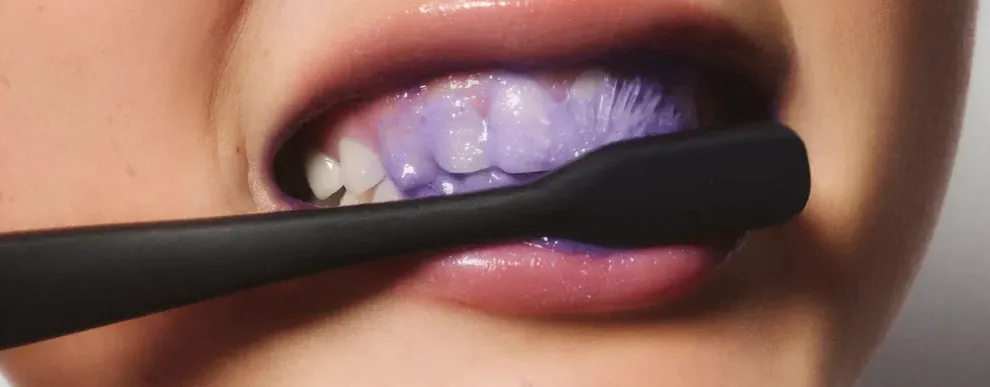
Purple toothpaste has exploded across social media, with bold claims promising instantly whiter teeth—sometimes in just one use. But as interest grows, so does skepticism. Many consumers are now asking the same question: is purple toothpaste a scam, or does it actually work?
The truth sits somewhere in the middle. Purple toothpaste isn’t fake, dangerous, or deceptive by default—but it’s also not a true whitening solution in the way most people understand whitening. In this article, we break down exactly how purple toothpaste works, what it can and can’t do, and whether it’s worth your money.
What Is Purple Toothpaste?
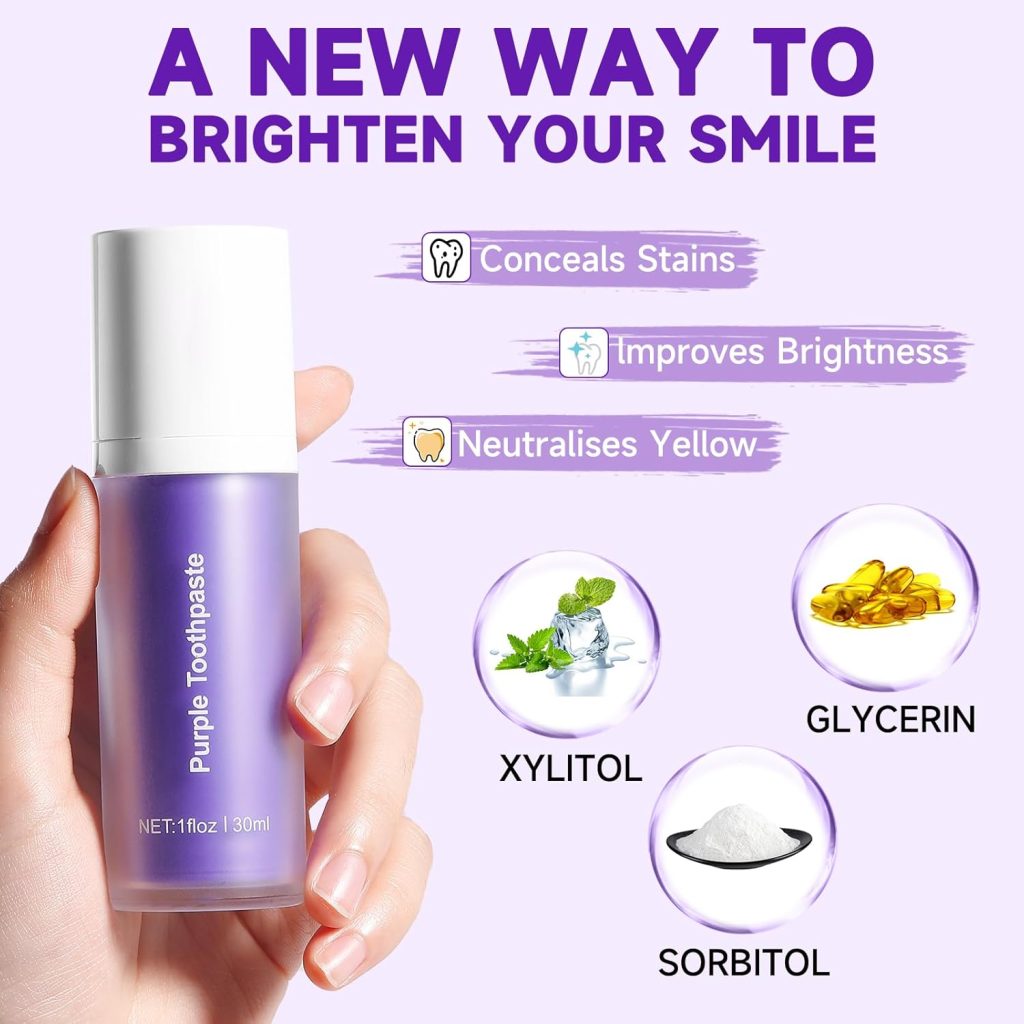
Purple toothpaste is a colour-correcting dental product designed to make teeth appear whiter rather than chemically whitening them. Instead of removing stains or lightening enamel, it uses violet pigments to visually counteract yellow tones on the surface of teeth.
The idea is borrowed from the beauty industry—much like purple shampoo neutralises yellow or brassy tones in blonde hair.
Some popular versions include standard toothpastes with a purple tint, while others are marketed as purple foams, serums, or gels applied after brushing.
To understand purple toothpaste, it helps to understand colour theory.
Yellow and purple sit opposite each other on the colour wheel. When applied together, they neutralise each other visually. Purple toothpaste coats the teeth with a thin layer of violet pigment that temporarily reduces the appearance of yellowing.
Key point:
👉 This is an optical illusion, not a chemical change.
Unlike peroxide-based whitening products, purple toothpaste does not:
- Bleach enamel
- Remove deep stains
- Change the natural shade of teeth
Instead, it creates a short-term brightness effect that fades after eating, drinking, or brushing again.
Is Purple Toothpaste a Scam?
No—but it is often misunderstood and over-marketed.
Purple toothpaste becomes controversial when it’s promoted as:
- A replacement for whitening strips
- An alternative to professional whitening
- A permanent whitening solution
When judged against those claims, it will disappoint. But when used for what it actually is—a temporary cosmetic enhancer—it does exactly what it’s supposed to do.
Why people feel misled:
- Before-and-after photos are often taken immediately after use
- Effects are shown under bright lighting
- Marketing language implies permanent results
When expectations don’t match reality, consumers understandably feel tricked.
What Purple Toothpaste Can Do
Used correctly, purple toothpaste can be helpful in certain situations.
✔ It can:
- Instantly reduce yellow tones
- Make teeth look brighter for a short period
- Enhance appearance for photos or events
- Complement existing whitening routines
For people who already whiten their teeth and want a quick visual boost, purple toothpaste can be a useful finishing product.
Shop our Purple Toothpaste for Teeth Whitening – Colour Corrector 30ml

What Purple Toothpaste Cannot Do
This is where the confusion lies.
✖ It cannot:
- Remove intrinsic stains
- Whiten teeth permanently
- Replace peroxide-based whitening
- Fix deep discolouration from ageing, medication, or enamel thinning
If your teeth are stained from coffee, wine, smoking, or natural enamel ageing, purple toothpaste alone will not solve the problem.
Purple Toothpaste vs Real Teeth Whitening
| Feature | Purple Toothpaste | Whitening Strips / Gels |
|---|---|---|
| Whitening method | Optical colour correction | Chemical bleaching |
| Result duration | Minutes to hours | Weeks to months |
| Removes stains | ❌ No | ✅ Yes |
| Changes enamel shade | ❌ No | ✅ Yes |
| Instant effect | ✅ Yes | ⚠ Sometimes |
| Long-term whitening | ❌ No | ✅ Yes |
Purple toothpaste is best viewed as cosmetic makeup for teeth, not treatment.
Is Purple Toothpaste Safe?
Generally, yes—if used correctly.
Most reputable purple toothpastes are safe for occasional use. However, there are some important things to watch for:
Safety considerations:
- Some colour-correcting products do not contain fluoride
- Overuse may lead to surface staining if pigments build up
- Not suitable as a sole oral-care product
Dentists usually recommend using purple toothpaste in addition to, not instead of, a proper fluoride toothpaste.
Commons FAQs: Purple Toothpaste Explained
Does purple toothpaste permanently whiten teeth?
No. The effect is temporary and cosmetic.
Can purple toothpaste damage teeth?
Not typically, but it should not replace fluoride toothpaste.
How long do results last?
Anywhere from minutes to a few hours, depending on eating and drinking.
Is purple toothpaste better than whitening strips?
No. Whitening strips actually change tooth colour; purple toothpaste does not.
Can I use purple toothpaste every day?
Occasional use is best unless advised otherwise by a dentist.
Is Purple Toothpaste Worth It?
Purple toothpaste is not a scam—but it’s not a miracle either.
Think of it as:
- A cosmetic enhancer, not treatment
- A temporary visual fix, not real whitening
- A supplement to whitening, not a replacement
When marketed honestly and used correctly, it can be a fun and useful product. When oversold as a permanent whitening solution, it leads to disappointment.